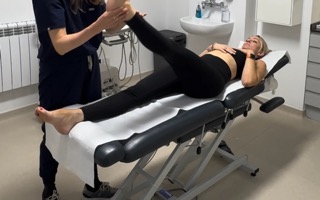
A “trapped nerve in the shoulder” usually starts in the neck. A nerve root is irritated where it leaves the spine, and the pain travels into the shoulder blade, the top of the shoulder or down the arm. The medical name is cervical radiculopathy.
Gentle exercises can help many people while the nerve settles. Below are the ones commonly used, how to do them safely, and the signs that mean you should stop and get checked.
What is a trapped nerve in the shoulder?
Between each pair of neck bones, a nerve root branches off the spinal cord and runs to the shoulder and arm. If the space it passes through narrows, or the nerve becomes inflamed, it sends pain and other symptoms along its path.
In a large population study, about 83 people in every 100,000 developed cervical radiculopathy each year. It was most common between the ages of 50 and 54 [1].
What causes it?
The two most common causes are:
- age-related changes in the neck (spondylosis), where discs lose height and small bony spurs narrow the space for the nerve;
- a disc bulge or herniation, where the soft centre of a disc presses on the nerve root.
In the same population study, age-related wear, a disc problem or both explained about two thirds of cases, and a confirmed disc protrusion about one in five [1]. Injury, and rarely infection or a tumour, are other causes.
Symptoms
Typical symptoms are:
- sharp, burning or aching pain from the neck into the shoulder blade, shoulder or arm;
- pins and needles or numbness in part of the arm or hand;
- weakness in certain arm or hand movements;
- pain that’s worse when you look up or turn your head towards the painful side.
Some people find that resting the hand on top of the head eases the arm pain, because it takes tension off the nerve.
Is it my neck or my shoulder?
Several problems can feel similar, and the right exercises depend on which one you have. A shoulder joint problem, such as a rotator cuff problem or frozen shoulder, usually hurts when you move the arm and rarely causes pins and needles in the hand. Nerve problems at the wrist or elbow, such as carpal tunnel syndrome, cause hand symptoms without neck pain [2].
A clinician will test your neck movements, reflexes, strength and skin sensation to work out where the problem is. Scans aren’t usually needed at first, but an MRI may be arranged if symptoms are severe or not improving.
How long does it take to get better?
The outlook is usually good. In the population study, about nine in ten people had no symptoms, or only mild ones, at follow-up. About a third had a further episode at some point [1].
A randomised trial of people with recent cervical radiculopathy found that six weeks of physiotherapy with home exercises, or a neck collar with rest, reduced neck and arm pain faster than waiting alone [3]. Exercise isn’t a cure, but it can help you stay active while the nerve recovers.
Exercises for a trapped nerve in the shoulder and neck
Move slowly and stay within a comfortable range. Mild stretching is fine. Stop if arm pain, pins and needles or numbness spread further down the arm, and talk to a clinician before trying again.
Chin tucks
- Sit or stand tall, looking straight ahead.
- Gently slide your chin straight back, as if making a double chin. Don’t tip your head down.
- Hold for 3–5 seconds, then relax.
- Repeat 5–10 times, a few times a day.
Shoulder blade squeezes
- Sit tall with your arms relaxed.
- Draw your shoulder blades gently back and down, without shrugging.
- Hold for 5 seconds, then relax.
- Repeat 10 times.
Shoulder rolls
- Lift your shoulders towards your ears.
- Roll them back and down in a slow circle.
- Do 5 rolls backwards, then 5 forwards.
Side bend (upper trapezius stretch)
- Sit tall and hold the edge of the chair with the hand on the side you want to stretch.
- Slowly tilt your ear towards the opposite shoulder until you feel a gentle stretch.
- Hold for 20–30 seconds, then repeat on the other side.
- Do this 2–3 times each side.
If tilting away from the painful side sends symptoms down the arm, skip this one.
Head turns
- Sit tall and turn your head slowly to one side as far as is comfortable.
- Pause, return to the middle, then turn to the other side.
- Repeat 5–10 times each way.
Other things that may help
Keep the neck moving rather than holding it stiffly. Change position often if you work at a desk, and raise your screen to eye level. A pillow that keeps your neck level with your body can help at night.
Simple painkillers from a pharmacist may help in the short term. If pain is severe or keeping you awake, see your GP. Hands-on treatment from a chiropractor or physiotherapist, combined with exercise, is an option for some people. Manipulation of the neck isn’t suitable for everyone, and your clinician should explain the risks first.
When to get urgent help
Call 999 or go to A&E if arm or shoulder pain comes with chest pain, breathlessness, sweating or feeling sick. Left arm and shoulder pain can be a sign of a heart attack.
See a doctor the same day if you have:
- weakness that is getting worse, such as dropping things;
- clumsy hands, difficulty with buttons, or unsteady walking;
- symptoms in both arms, or in your legs;
- changes in bladder or bowel control;
- fever, unexplained weight loss, or a history of cancer;
- pain after a fall or accident.
Next steps
If symptoms haven’t started to ease after a few weeks, or you’re unsure what’s causing them, get them assessed. At Vale Health Clinic our chiropractors can examine your neck and shoulder and explain the likely cause. A first chiropractic appointment lasts 50 minutes and costs £70. Read more about neck pain, or call 01892 543029.
For trapped nerves elsewhere, see how to relieve pain from a trapped nerve and back exercises for a trapped nerve.
References
- Radhakrishnan K, Litchy WJ, O’Fallon WM, Kurland LT. Epidemiology of cervical radiculopathy. A population-based study from Rochester, Minnesota, 1976 through 1990. Brain 1994;117(Pt 2):325–335. doi:10.1093/brain/117.2.325
- Iyer S, Kim HJ. Cervical radiculopathy. Curr Rev Musculoskelet Med 2016;9(3):272–280. doi:10.1007/s12178-016-9349-4
- Kuijper B, Tans JT, Beelen A, Nollet F, de Visser M. Cervical collar or physiotherapy versus wait and see policy for recent onset cervical radiculopathy: randomised trial. BMJ 2009;339:b3883. doi:10.1136/bmj.b3883
This article is general information, not personal medical advice. Please speak to a clinician about your own situation.
This article is general information and isn’t a substitute for advice about your own health. If you’re worried about a symptom, speak to your GP or book an assessment.