01
Step 1 of 4
Free consultation
We ask about your knee, your general health and your medicines, including any diabetes treatment. We examine the knee and scan it with ultrasound, and look at any X-rays or MRI scans you have.
We’d like to use cookies to understand how our website is used and to measure our Google advertising. They’re only set if you agree. Essential settings, such as remembering this choice, are always used. Find out more.

Cingal® puts a fast-acting steroid and long-acting hyaluronic acid into one injection for an arthritic knee. At Vale it’s given under ultrasound guidance, after a free consultation.
Free consultation, with no obligation · £400 per knee
One of our patients talks about her knee and her Cingal® treatment. This is her own experience, and results vary from person to person.
An arthritic knee often has two things going on. The joint lining can be inflamed, which drives pain and swelling. And the joint fluid has thinned, so the knee moves less smoothly.
A steroid injection calms inflammation quickly, but its effect often fades within weeks. Hyaluronic acid works on the joint fluid and lasts longer, but can take weeks to help.
Cingal® was designed to deal with both in one visit.
Book your free consultation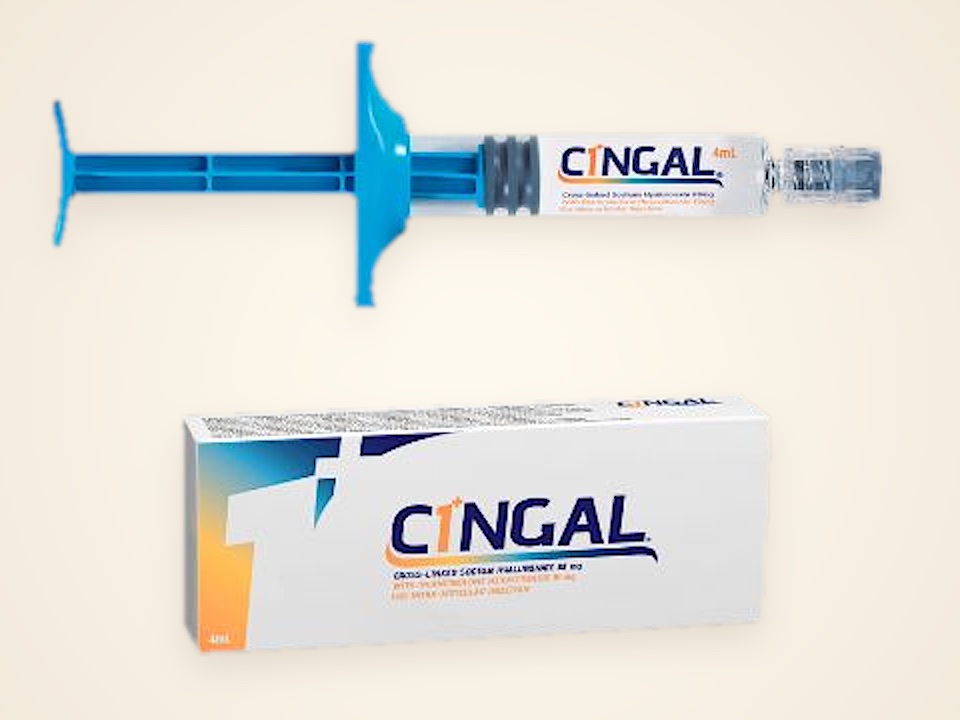
Each 4 ml Cingal® syringe contains 88 mg of cross-linked hyaluronic acid and 18 mg of triamcinolone hexacetonide, a long-acting steroid.
The steroid is aimed at the first few weeks, when pain and inflammation are often worst. The hyaluronic acid is aimed at the months after that.
Cingal® is used for knee osteoarthritis and is given as a single injection.
Based on the main Cingal® trial and the wider research. Everyone responds differently.
The steroid often eases pain within days, before hyaluronic acid would usually start working.
In the main trial, pain was still lower than with a placebo injection at six months.
Both medicines in a single injection, so there’s no need for two appointments.
No anaesthetic or recovery period. You walk out afterwards.
The two ingredients work on different timescales. Together they aim to cover the gap between the quick but short-lived effect of a steroid and the slower effect of hyaluronic acid.
Triamcinolone hexacetonide damps down inflammation in the joint lining, often within days.
Cross-linked hyaluronic acid thickens the joint fluid and is cleared slowly.
Early relief from the steroid, with the hyaluronic acid aiming to carry it on for months.
Cingal® is used for mild to moderate osteoarthritis of the knee.
It may suit you if your knee is painful and swollen now, and you’d like relief sooner than hyaluronic acid alone would usually give. It can also suit people who have had a short-lived benefit from a steroid injection before.
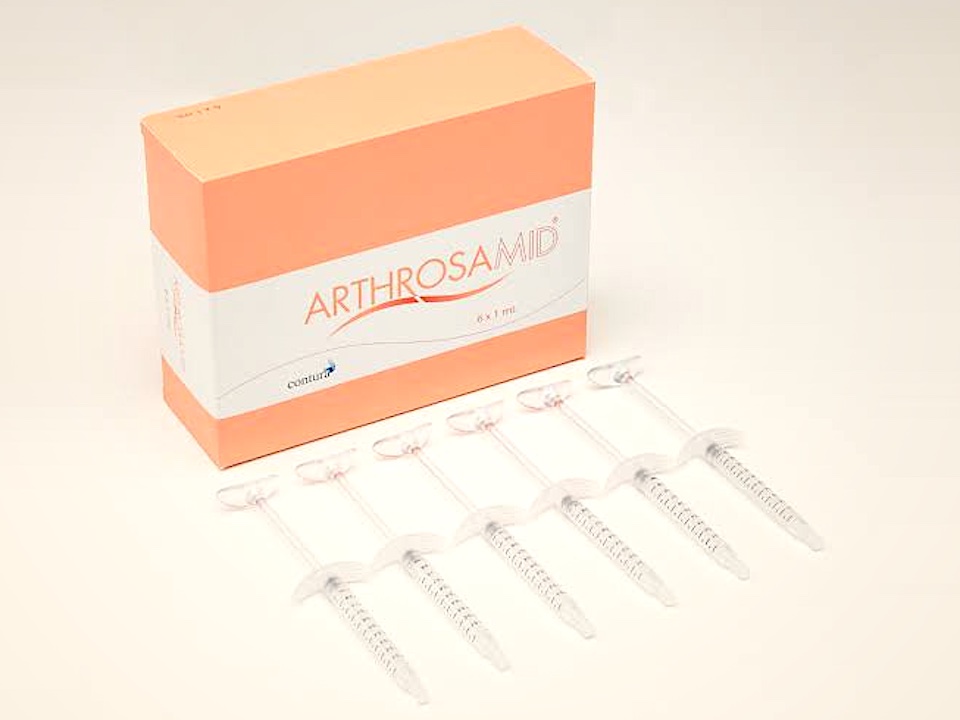
It’s less likely to help a badly worn knee. In that case we’ll talk through other options, such as Arthrosamid® or a surgical opinion.
The main Cingal® trial compared it with hyaluronic acid alone and with a saltwater placebo, in 368 people with knee osteoarthritis [1].
That fits what’s known about steroid injections, which often work quickly but fade over weeks [2]. NICE advises the NHS not to offer hyaluronic acid injections for osteoarthritis, so Cingal® is mainly available privately [3].
The trial reports averages. Some people get months of relief and others notice little, and we’ll be honest with you about what’s realistic for your knee.
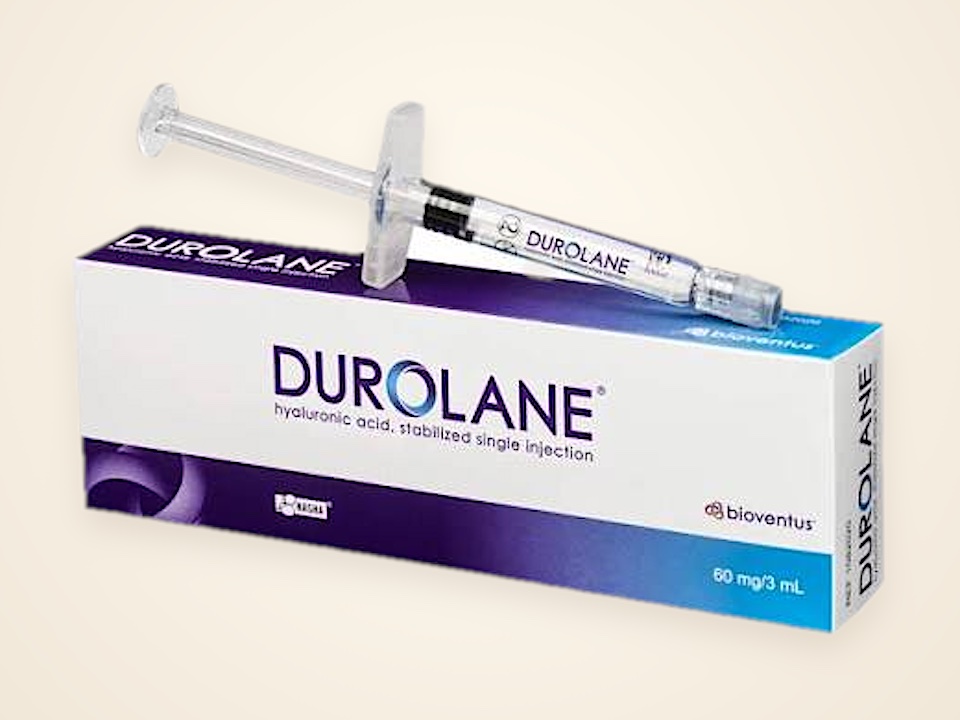
| Cingal® | Cortisone | Durolane® | Ostenil® Plus | |
|---|---|---|---|---|
| What it is | Hyaluronic acid with a steroid | Steroid | Stabilised hyaluronic acid | Hyaluronic acid with mannitol |
| Relief starts | Within days | Within days | Over a few weeks | Over 2–4 weeks |
| Contains a steroid | Yes | Yes | No | No |
| Price at Vale | £400 | £250 | £350 | £300 |
If you’d rather avoid a steroid, for example because of diabetes, Durolane® or Ostenil® Plus may suit you better.
Mild soreness for a day or two is common. Contact us, or seek urgent medical advice, if the knee becomes increasingly hot, red, swollen and painful, or you feel feverish or unwell. These can be signs of infection, which is rare but needs prompt treatment.

Injection Therapist and Chiropractor, Clinic Director
GCC 03996

Doctor, Sport & Exercise Medicine
GMC 7689922



I first saw Gary for a consultation regarding the arthritis in my knees with a view to having a hyaluronic acid injection. Gary was extremely knowledgeable and went through all the options before suggesting which would be the best option for me.
My mum had acute knee pain which has been treated at the clinic, she now has much better mobility and positive outlook due to the treatment received. Gary has been so helpful and supportive throughout the consultation and treatment.
I recently had an ultrasound guided cortisone injection with Gary… Gary took the time to explain everything clearly before the procedure which really put me at ease, not easy when you’re not a fan of needles! The process itself was essentially pain free.
Gary helped me with my frozen shoulder. He was very thorough, professional and informative. I was given a cortisone injection, which he talked me through. During the procedure he was calming and efficient.
I cannot thank Gary and Gabriel enough for the stem cell treatment they gave me. When I started my treatment my tendonitis was so bad in my elbows that I couldn’t carry my little children, drive the car or do my day job without getting in severe pain.
Real Google reviews, shortened. Individual results vary. Read all our reviews ↗
Most people feel a sharp scratch and some pressure as the gel goes in. Ultrasound guidance helps us place the needle quickly and accurately.
The knee may be sore or swollen for a day or two, and some people have facial flushing. The steroid can raise blood sugar for a few days if you have diabetes. Infection is rare. We go through your health and medicines at your consultation.
Often, yes. We’ll suggest checking your blood sugar more often for a few days afterwards. Tell us about your diabetes and medicines at your consultation.
In the main trial, people having Cingal® had less pain than those having hyaluronic acid alone at one and three weeks. Many notice a difference within days.
In the trial, pain was still lower than with a placebo injection at six months. Some people do better than that, and some notice little difference.
Because it contains a steroid, we avoid repeating it too often in the same knee. We’ll review how long the benefit lasted before suggesting another.
Find out if Cingal® suits your knee at a free consultation.
Written by Gary Edwards, Injection Therapist (PG Cert Injection Therapy) and Chiropractor (GCC 03996). Last updated 15 October 2026.