
Gary Edwards
Injection Therapist and Chiropractor, Clinic Director
GCC 03996
We’d like to use cookies to understand how our website is used and to measure our Google advertising. They’re only set if you agree. Essential settings, such as remembering this choice, are always used. Find out more.
A bend, lump or pain in the penis can be worrying, and it’s more common than many men realise. We offer a free, private consultation and non-surgical treatment options, with honest advice about what they can and can’t achieve.
Free consultation, with ultrasound if needed · Non-surgical options · Discreet clinic on Vale Road
Peyronie’s disease happens when a patch of firm scar tissue, called a plaque, forms inside the penis. Because the plaque doesn’t stretch like the surrounding tissue, the penis can bend or change shape when erect.
It’s thought to follow small, often unnoticed injuries to the penis, and it’s more common in men over 40 and in men with diabetes. It isn’t cancer and it isn’t infectious.
The penis curves up, down or to one side when erect, sometimes more than it used to.
A firm area or lump you can feel under the skin of the shaft.
Pain in the penis, with or without an erection, often in the early months.
An indent, narrowing or shortening of the penis.
Some men also find it harder to get or keep an erection.
The bend can make sex uncomfortable or difficult, for you or your partner.
A private conversation about your symptoms, how long you’ve had them and how they affect you.
If you agree, a brief examination and, when it’s helpful, a diagnostic ultrasound scan of the plaque. This is included in your free consultation.
We explain your options, such as shockwave, with or without the P-Shot®, and what’s realistic for you.
We check how you’re getting on during and after treatment, and refer you to a urologist if needed.
Active phase. In the first months, the plaque is forming. The penis may be painful and the curve may change.
Stable phase. Usually after 12 to 18 months, pain tends to settle and the curve stops changing.
The phase you’re in affects which treatments are likely to help, so we’ll ask how your symptoms have changed over time.
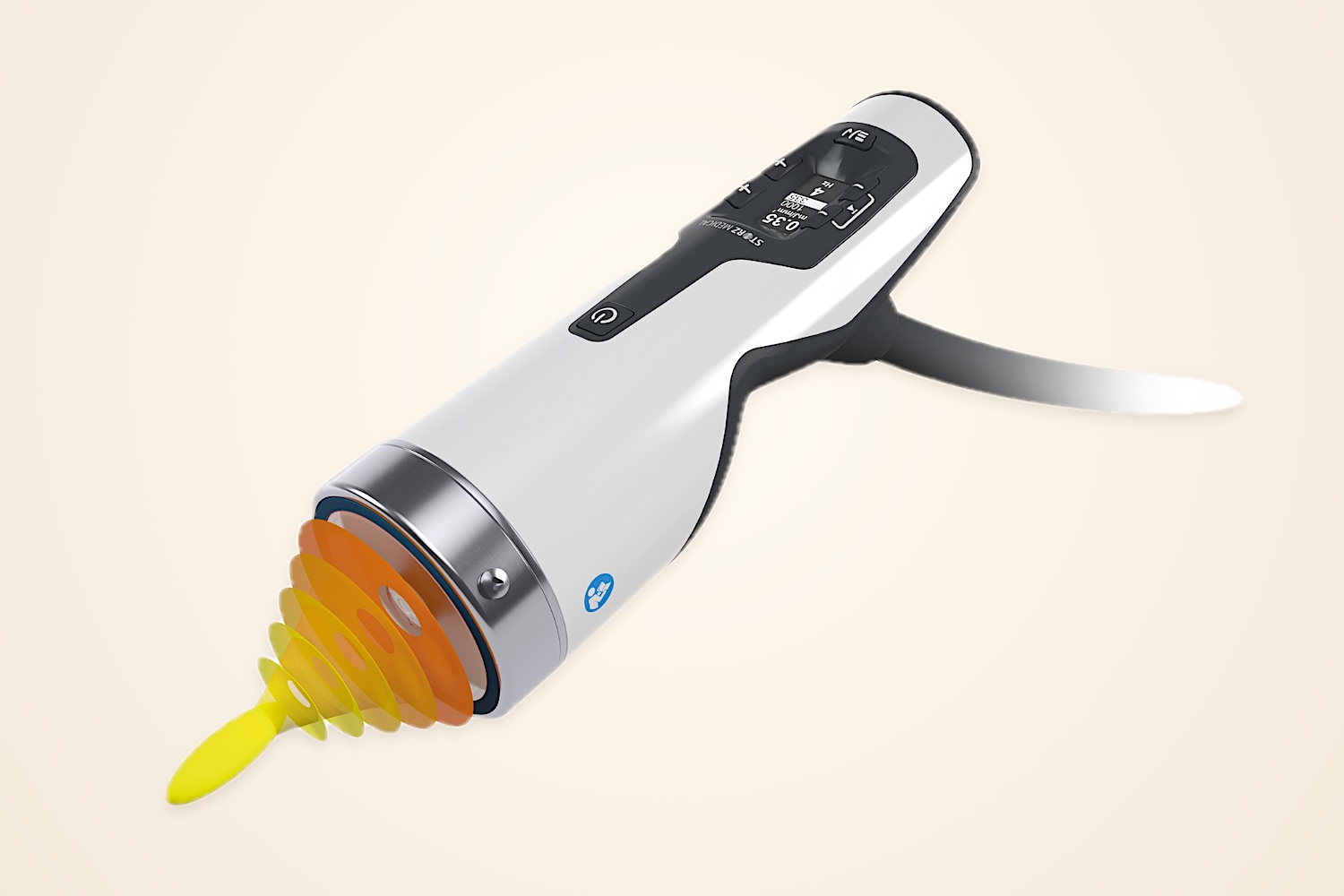
Low-intensity focused shockwave sends gentle pulses of sound energy into the area. A course is usually six sessions, with no needles or anaesthetic.
The P-Shot® uses platelet-rich plasma prepared from your own blood. It can be added to a course of shockwave.
Some men use a traction or vacuum device at home, which may help with length and curve over time. We can talk you through how they’re used.
The European Society for Sexual Medicine reviewed the evidence on shockwave for Peyronie’s. It found that shockwave may help reduce pain, but doesn’t appear to improve the curve or the plaque [1]. The evidence for PRP in Peyronie’s is still very limited.
So we see these treatments as options to discuss, particularly for pain, rather than a guaranteed fix for the curve.
If the curve is severe, has been stable for some time and makes sex difficult or impossible, surgery may be the most effective option. We don’t carry out this surgery at Vale, but we can explain what’s involved and refer you to a urologist.
Go to A&E straight away if you hear a crack or pop during sex followed by sudden pain, swelling and loss of erection (a possible penile fracture), or if you have an erection that lasts more than four hours.
Injection Therapist and Chiropractor, Clinic Director
GCC 03996



We can’t promise that. Research suggests shockwave may ease pain but doesn’t reliably reduce the curve. We’ll give you an honest view at your consultation, and explain other options, including surgery, if the curve is severe.
Most men feel only a light tapping. No anaesthetic or needles are needed, and you can carry on with your day afterwards.
Shockwave can cause mild discomfort, redness or small bruises, which settle on their own. The P-Shot® involves injections, so there’s a small risk of bruising, soreness or infection. We explain the risks before you decide.
Pain often settles over time. The curve improves on its own in some men, stays the same in many, and gets worse in some. That’s why it’s worth getting advice early.
You don’t need a referral. But if you have erection problems as well, it’s worth seeing your GP for a health check, as they can be linked to blood pressure, diabetes or heart health.
Book a free, confidential consultation. It’s a private conversation, with no obligation.
Written by Gary Edwards, Injection Therapist (PG Cert Injection Therapy) and Chiropractor (GCC 03996). Last updated 15 October 2026.