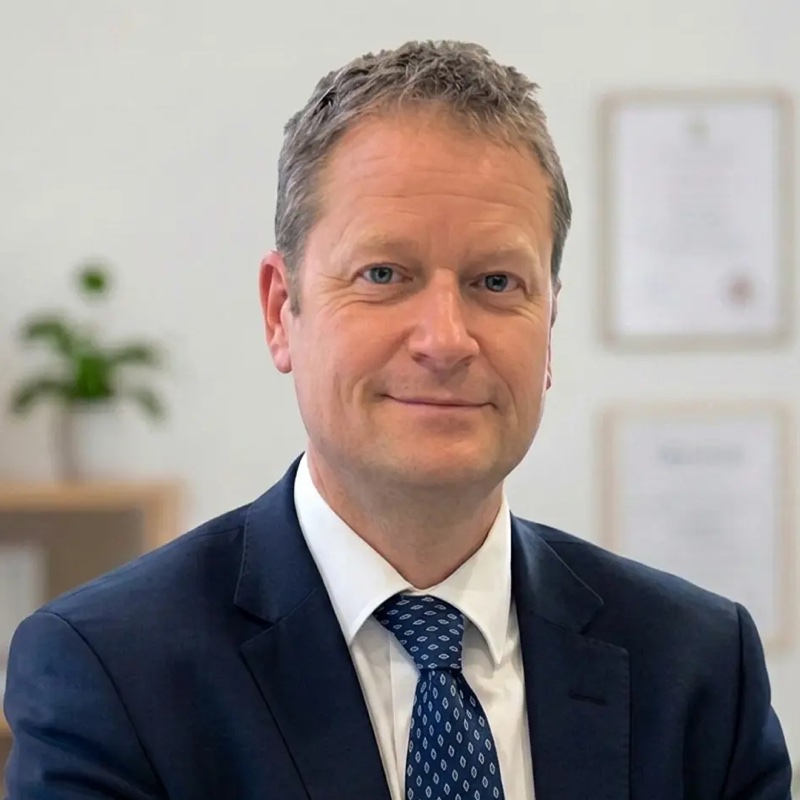
Mr Darryl M Coombes
Consultant Oral & Maxillofacial Surgeon
GMC 4745266 (Specialist Register, Oral & Maxillofacial Surgery)
We’d like to use cookies to understand how our website is used and to measure our Google advertising. They’re only set if you agree. Essential settings, such as remembering this choice, are always used. Find out more.
Assessment and removal of moles and other skin lesions, surgery for skin cancers on the face, and scar revision, with consultant surgeon Mr Darryl Coombes. All carried out at Vale under local anaesthetic.
Consultation with Mr Coombes £250 · CQC-registered for surgery · Local anaesthetic only
Most moles and skin lumps are harmless. But a mole that is new, growing, changing shape or colour, bleeding or itching, or a sore that won’t heal, should always be checked by a doctor before anyone thinks about removing it for cosmetic reasons.
If you’re worried about a mole, don’t wait for a cosmetic appointment. See your GP, who can refer you urgently if needed. Mr Coombes can also assess skin lesions at Vale.
Call 01892 543029Mr Coombes removes moles and other skin lesions, such as cysts, skin tags and lumps, from the face and body. Depending on the lesion, it may be shaved away or cut out and closed with fine stitches. Where appropriate, the removed tissue is sent to a laboratory to confirm what it is.
He also carries out surgery for skin cancers on the face and scar revision to improve the look of existing scars. Everything is done at Vale under local anaesthetic, and you go home the same day.
Removal of moles you don’t like, or that catch on clothing, after checking they look harmless.
Cysts, skin tags, lumps and other growths on the face and body.
Removal of basal cell, squamous cell and other skin cancers on the face, with the tissue sent for testing.
Surgery, sometimes with steroid injections, to make an existing scar less noticeable.
Mr Coombes examines the mole, lesion or scar, asks about any changes and explains the options.
The area is numbed with local anaesthetic and the lesion removed. Most small procedures take well under an hour.
Where appropriate, the removed tissue is sent to a laboratory, and we explain the result to you.
We check how the area is healing, remove any stitches and arrange further treatment if it’s needed.
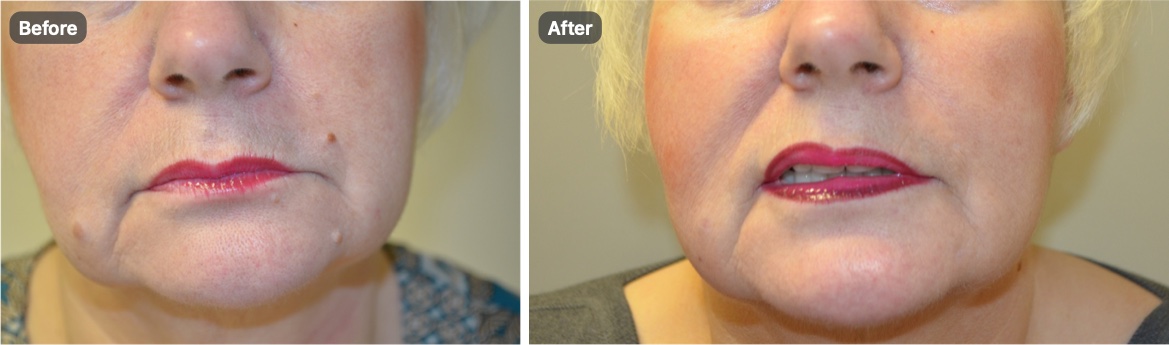
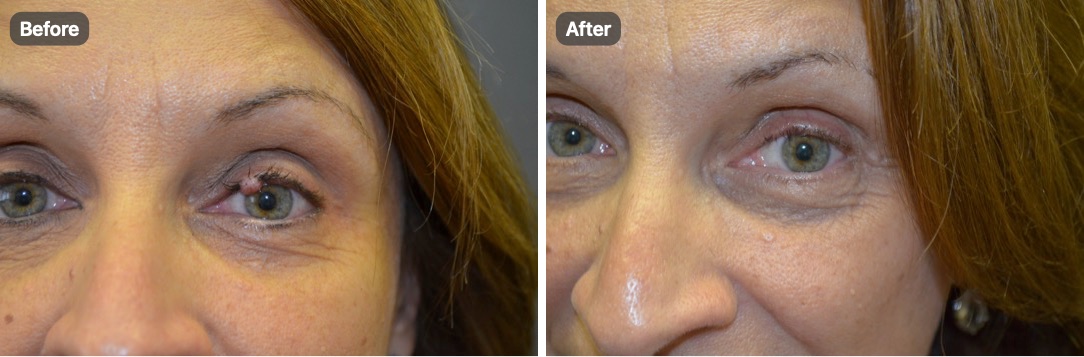
Shown with each patient’s written permission. Results vary from person to person, and these photos don’t guarantee your result.
Skin cancers often appear on areas exposed to the sun, especially the face. The main types are:
Many skin cancers can be removed under local anaesthetic. The tissue is sent to a laboratory to confirm the diagnosis and check that it has been fully removed. For larger areas, the wound may be closed with a skin graft or by moving nearby skin. If melanoma is suspected, you may need specialist care through the NHS, and we’ll make sure you’re referred.
Scars from injuries, previous surgery or acne can sometimes be made less noticeable. Depending on the scar, Mr Coombes may cut out the old scar and close it more neatly, change its direction so it sits in a natural line, or use steroid injections to flatten a raised scar. No scar can be removed completely, so he’ll explain what improvement is realistic.
See your GP promptly if you notice a mole that is new, changing in size, shape or colour, bleeding, itching or crusting, or a sore that hasn’t healed within a few weeks.
Consultant Oral & Maxillofacial Surgeon
GMC 4745266 (Specialist Register, Oral & Maxillofacial Surgery)
Mr Darryl Coombes is a consultant oral and maxillofacial surgeon. During his ten years as an NHS consultant, much of his work involved removing skin cancers from the face and reconstructing the area afterwards.
You’ll see Mr Coombes at every stage: your assessment, your procedure and your follow-up.

Yes, every removal leaves some kind of mark. A shaved mole often leaves a small flat or slightly paler patch; a mole that’s cut out leaves a fine line. Mr Coombes will explain what to expect for your mole.
Where appropriate, removed tissue is sent to a laboratory to confirm what it is. We’ll explain the result and anything you need to do next.
Risks include bleeding, infection, a scar that’s wider, raised or darker than expected, changes in skin colour, and the mole growing back. For skin cancers, more surgery is sometimes needed if the laboratory finds the edges weren’t completely clear.
Please see your GP first if a mole is new, changing, bleeding or itching. They can refer you urgently through the NHS if needed. Mr Coombes can also assess skin lesions at Vale.
Many scars can be made less noticeable, but no scar can be removed completely. Mr Coombes will tell you honestly whether revision is likely to help.
Book a £250 consultation with Mr Coombes to have your mole, lesion or scar assessed.
Results vary from person to person. Treatment is only offered after assessment. Written by Mr Darryl Coombes, Consultant Oral & Maxillofacial Surgeon (GMC 4745266). Last updated 15 October 2026.