Dr Gabriel Azzini
Doctor, Sport & Exercise Medicine
GMC 7689922
We’d like to use cookies to understand how our website is used and to measure our Google advertising. They’re only set if you agree. Essential settings, such as remembering this choice, are always used. Find out more.
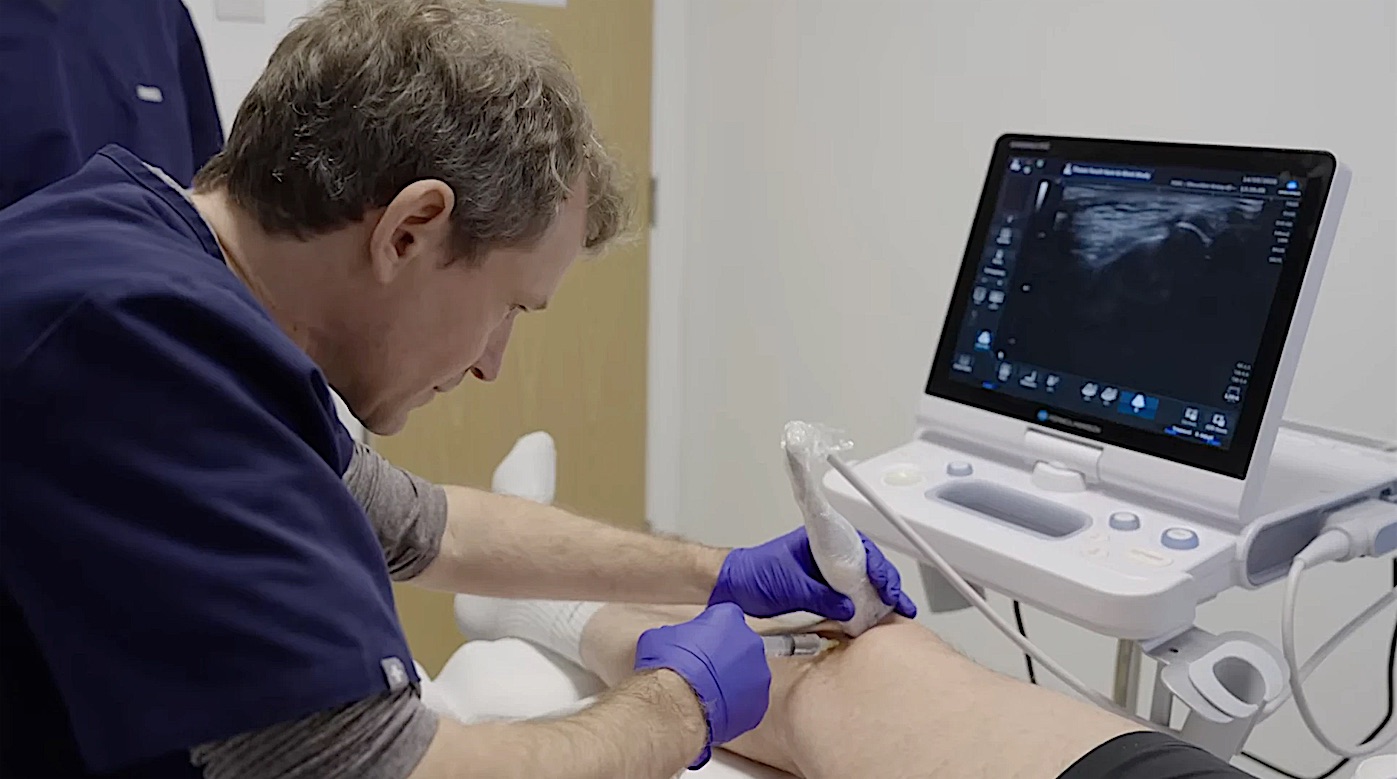
Prolotherapy is a course of injections into ligaments and tendons where they attach to bone. It’s an option for some people with long-standing back, pelvic or joint pain, usually alongside an exercise programme.
Assessment first · Experienced injection team · Usually combined with exercise
Prolotherapy involves injecting a mild irritant solution, usually a sugar (dextrose) solution with local anaesthetic, into ligaments and tendons where they attach to bone.
The idea is that this triggers a small, controlled healing response, which may help strengthen ligaments that have become lax or painful. It’s usually given as a course of injections a few weeks apart.
Long-standing pain that may be linked to the ligaments around the spine.
Pain around the back of the pelvis, including after pregnancy.
Such as knee arthritis or a joint that feels unstable after an old sprain.
Some long-standing tendon problems that haven’t settled with other treatment.
A one-hour first appointment: we take a full history, examine you and work out whether prolotherapy is likely to help.
We explain what’s involved, the number of sessions, the costs and the alternatives.
A series of small injections at the painful points, with local anaesthetic. Follow-up sessions take about 30 minutes.
You may be sore for a few days. We review your progress before each session and adjust the plan.
The evidence is mixed, and it depends on the problem:
Prolotherapy isn’t a first-line treatment. It’s usually considered when exercise and other treatments haven’t helped enough, and works best as part of a wider plan.
Seek urgent medical advice if an injected area becomes increasingly hot, red, swollen and painful, or you develop a fever. After injections near the spine, call 999 if you develop new weakness or numbness in the legs, or problems controlling your bladder or bowels.
Doctor, Sport & Exercise Medicine
GMC 7689922

Injection Therapist and Chiropractor, Clinic Director
GCC 03996



I recently had an ultrasound guided cortisone injection with Gary… Gary took the time to explain everything clearly before the procedure which really put me at ease, not easy when you’re not a fan of needles! The process itself was essentially pain free.
Gary helped me with my frozen shoulder. He was very thorough, professional and informative. I was given a cortisone injection, which he talked me through. During the procedure he was calming and efficient.
I first saw Gary for a consultation regarding the arthritis in my knees with a view to having a hyaluronic acid injection. Gary was extremely knowledgeable and went through all the options before suggesting which would be the best option for me.
My mum had acute knee pain which has been treated at the clinic, she now has much better mobility and positive outlook due to the treatment received. Gary has been so helpful and supportive throughout the consultation and treatment.
I cannot thank Gary and Gabriel enough for the stem cell treatment they gave me. When I started my treatment my tendonitis was so bad in my elbows that I couldn’t carry my little children, drive the car or do my day job without getting in severe pain.
Real Google reviews, shortened. Individual results vary. Read all our reviews ↗
The injections can be uncomfortable, but local anaesthetic is mixed into the solution to help. Most people find it manageable.
Pain, stiffness and some swelling for a few days after each session are common, and part of the expected response. Less commonly, there may be bruising or a headache. Rarely, there’s a risk of infection or, for injections near the spine, nerve irritation. We explain the risks for your treatment before you decide.
Most people need a course of several sessions, a few weeks apart. We’ll suggest a plan after your consultation and review it as you go.
We usually advise paracetamol rather than anti-inflammatory painkillers such as ibuprofen, which may dampen the healing response. We’ll give you specific advice.
Call us to book a consultation and find out if prolotherapy is suitable for you.
Written by Gary Edwards, Injection Therapist (PG Cert Injection Therapy) and Chiropractor (GCC 03996). Last updated 15 October 2026.