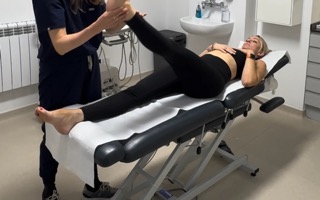
Most trapped (pinched) nerves get better on their own within weeks to a few months. While that happens, the most helpful things are to keep gently active, find positions that ease the pain, do simple exercises, and use painkillers sensibly. Bed rest doesn’t speed recovery [1].
A few symptoms, such as numbness between the legs or loss of bladder control, need urgent care. These are listed below.
What is a trapped nerve?
A trapped nerve is a nerve that is squeezed or irritated by the tissue around it, such as a disc, bone spur, ligament or tendon. The irritated nerve becomes inflamed and sends pain and other signals along its path.
The most common sites are:
- the neck, causing pain into the shoulder and arm (cervical radiculopathy);
- the lower back, causing pain down the leg (sciatica);
- the wrist (carpal tunnel syndrome) or elbow, causing hand symptoms.
What causes a trapped nerve?
In the spine, the usual causes are a disc bulge pressing on a nerve root, or age-related narrowing of the spaces the nerves pass through. In the neck, wear-related changes, a disc problem or both account for most cases [2].
Elsewhere, repetitive movements, swelling or holding a joint in one position for long periods can compress a nerve. Pregnancy, diabetes and an underactive thyroid make some nerve entrapments more likely.
Symptoms of a trapped nerve
- sharp, shooting or burning pain along the path of the nerve;
- pins and needles or numbness;
- muscle weakness in the area the nerve supplies;
- pain that’s worse with certain positions, coughing or sneezing.
Spinal nerve pain is often felt more in the arm or leg than in the neck or back.
How long does a trapped nerve last?
The outlook is usually good. In a trial of people with sciatica, 87% reported improvement after 12 weeks, whether they rested in bed or carried on with normal activity [1]. In a population study of trapped nerves in the neck, about nine in ten people had no symptoms or only mild ones at follow-up [2].
Symptoms can come back, and some people need more treatment if pain persists.
How to relieve trapped nerve pain
Keep moving
Stay as active as the pain allows. Short, frequent walks are usually better than long periods of sitting or lying. Bed rest doesn’t help sciatica recover any faster than staying active [1].
Find easing positions
For leg pain from the back, lying on your back with your knees bent over a pillow, or on your side with a pillow between your knees, often helps. For arm pain from the neck, resting the hand on top of your head may ease it.
Heat or cold
A warm pack can relax tight muscles. Some people prefer a cold pack wrapped in a towel. Use either for 15–20 minutes at a time, and protect your skin.
Gentle exercises
Gentle movement helps keep joints and muscles from stiffening while the nerve settles. Step-by-step exercises are in our guides to shoulder and neck exercises for a trapped nerve and back exercises for a trapped nerve.
A simple rule: if an exercise makes pain move further down the arm or leg, stop it. If the pain moves back towards the spine, that’s usually a good sign.
Painkillers
Anti-inflammatory painkillers such as ibuprofen may help in the short term, if they’re safe for you. A pharmacist can advise on what suits you and for how long.
Medicines made for nerve pain don’t always help. A large trial found that pregabalin was no better than a placebo for sciatica and caused more side effects, such as dizziness [3]. If pain is severe, talk to your GP about other options.
Ergonomics and sleep
If you work at a desk, raise your screen to eye level, take regular breaks and avoid leaning on your elbows. A pillow that keeps your neck level can help with arm symptoms at night.
Treatment options if pain doesn’t settle
If symptoms last more than a few weeks, an assessment can confirm where the nerve is irritated and rule out other causes. Options include:
- exercise-based rehabilitation, from a physiotherapist or chiropractor;
- manual therapy as part of a wider plan, such as treatment from a chiropractor. It isn’t suitable for everyone, and your clinician should discuss the risks first;
- a scan, such as an MRI, if symptoms are severe, getting worse or not improving;
- spinal injections, for severe nerve pain that hasn’t improved;
- surgery, for a small number of people with persistent severe pain or worsening weakness.
When to get urgent help
Go to A&E straight away if you have back pain or sciatica with any of these. They can be signs of cauda equina syndrome, which needs emergency treatment:
- numbness or tingling between your legs or around your bottom or genitals;
- new problems passing urine, or loss of bladder or bowel control;
- sciatica in both legs;
- new difficulty getting an erection or loss of sensation during sex.
See a doctor the same day if you have worsening weakness, clumsy hands or unsteady walking, a fever, unexplained weight loss, a history of cancer, or pain after a fall or accident.
Next steps
If your symptoms aren’t easing after a couple of weeks, or you’re unsure what’s causing them, get them assessed. At Vale Health Clinic our chiropractors examine the spine and nerves and explain what’s likely to help. A first appointment lasts 50 minutes and costs £70. Read more about back pain and neck pain, or call 01892 543029.
References
- Vroomen PC, de Krom MC, Wilmink JT, Kester AD, Knottnerus JA. Lack of effectiveness of bed rest for sciatica. N Engl J Med 1999;340(6):418–423. doi:10.1056/NEJM199902113400602
- Radhakrishnan K, Litchy WJ, O’Fallon WM, Kurland LT. Epidemiology of cervical radiculopathy. A population-based study from Rochester, Minnesota, 1976 through 1990. Brain 1994;117(Pt 2):325–335. doi:10.1093/brain/117.2.325
- Mathieson S, Maher CG, McLachlan AJ, et al. Trial of pregabalin for acute and chronic sciatica. N Engl J Med 2017;376(12):1111–1120. doi:10.1056/NEJMoa1614292
This article is general information, not personal medical advice. Please speak to a clinician about your own situation.
This article is general information and isn’t a substitute for advice about your own health. If you’re worried about a symptom, speak to your GP or book an assessment.