
Gary Edwards
Injection Therapist and Chiropractor, Clinic Director
GCC 03996
We’d like to use cookies to understand how our website is used and to measure our Google advertising. They’re only set if you agree. Essential settings, such as remembering this choice, are always used. Find out more.
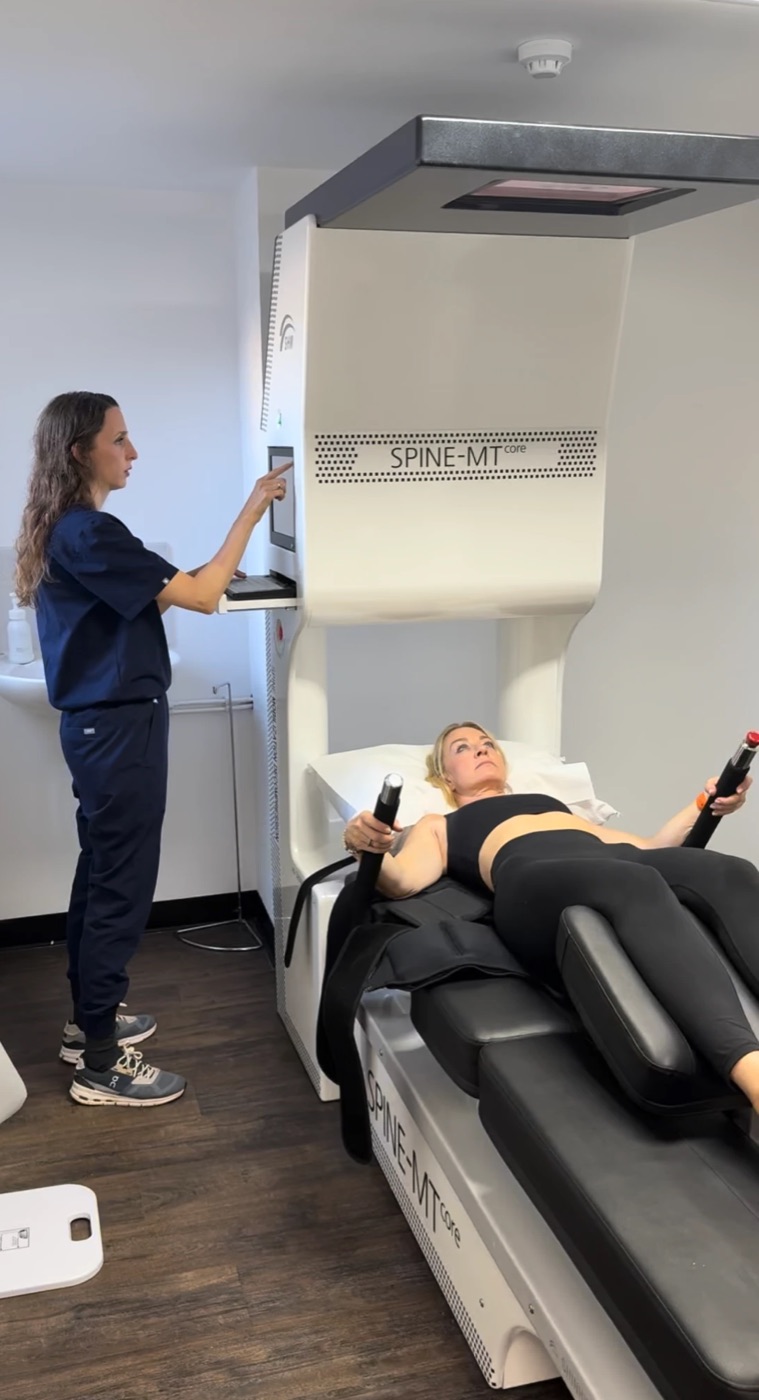
A non-surgical option for back pain, neck pain and sciatica, delivered by our chiropractors as part of a plan that starts with a proper assessment.
Assessment first · Non-surgical · Delivered by our GCC-registered chiropractors
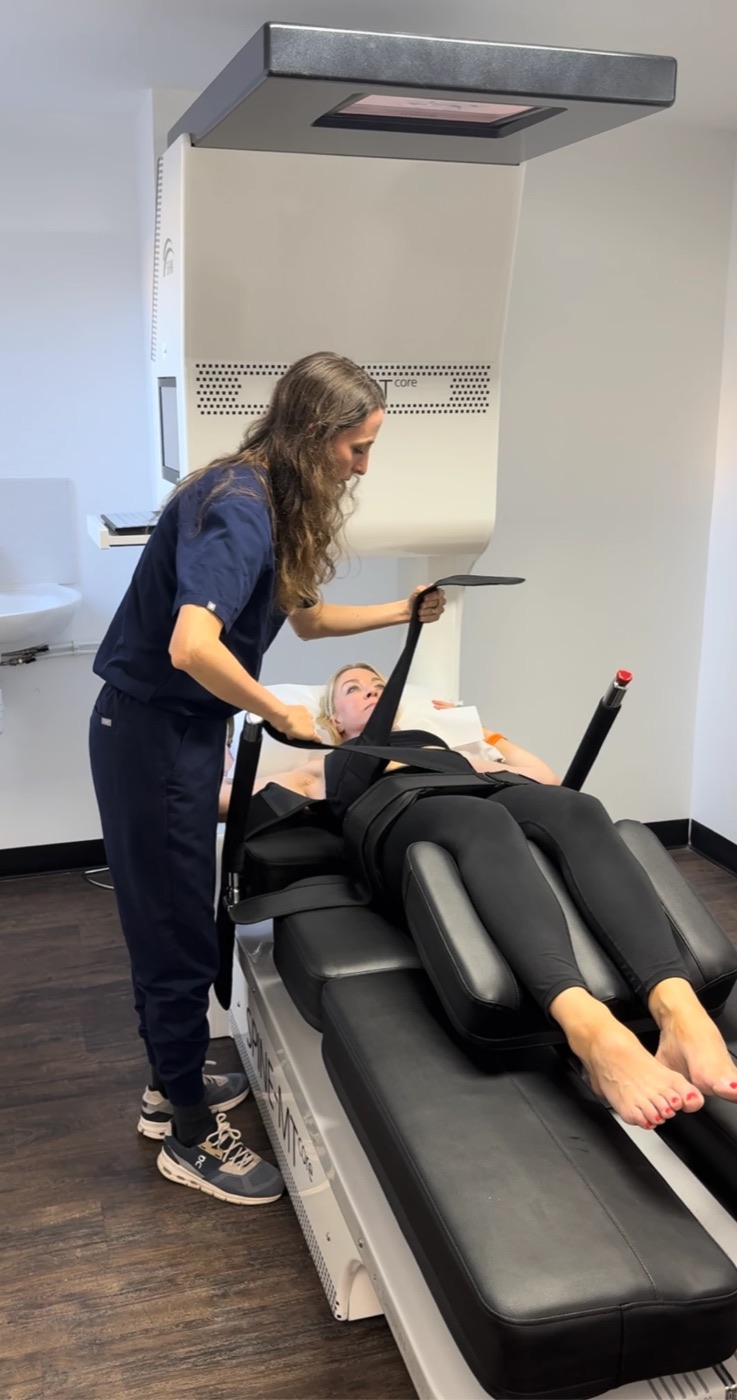
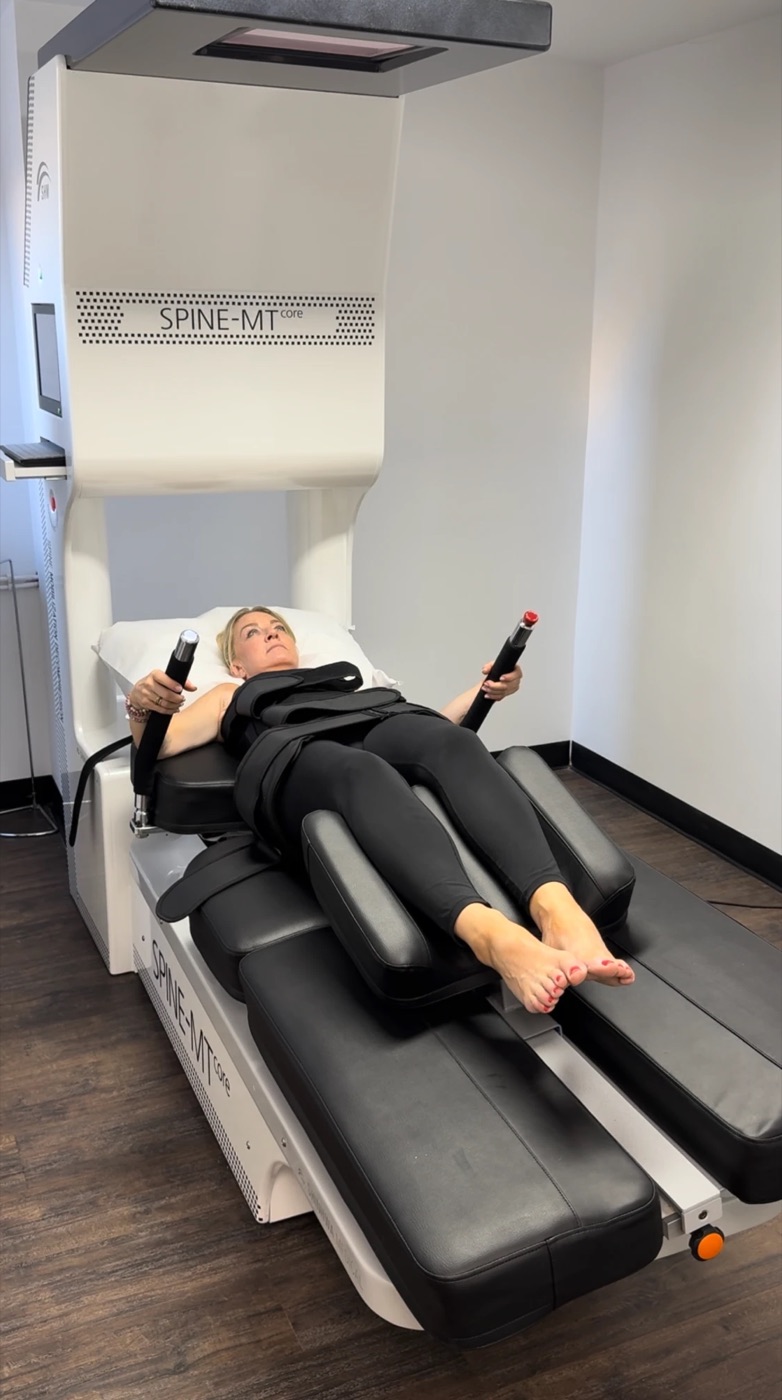
It’s a form of mechanical traction: a controlled, computer-guided pulling force applied to part of the spine while you lie on a specialised table. The aim is to change the load on the spine for a short period, which some people find eases pain and makes movement more comfortable.
Your spine is made of vertebrae separated by intervertebral discs, which absorb load and allow movement. Age-related changes, injury or a disc herniation can sometimes irritate a nearby nerve root. In the lower back, that can cause pain, tingling or numbness travelling into the buttock and leg, usually called sciatica.
Not every disc bulge causes symptoms, and not all back pain comes from a disc. That’s why we assess you before recommending any treatment.
Non-surgical decompression is different from surgical decompression, which is an operation to relieve pressure on a nerve. Nothing is removed and there’s no incision.
The Spine MT Core combines three things in one session:
The idea is that changing the forces on the disc and surrounding tissues, gently and repeatedly, may help some people move more comfortably. A temporary change in spinal loading doesn’t mean a disc has “healed” or a nerve has been permanently freed, and we won’t describe it that way.
If you feel any discomfort during treatment, the table can be stopped straight away using the cut-off switch on its handle.
Whether decompression is appropriate depends on your diagnosis, your symptoms and what we find on examination. We commonly assess people with:
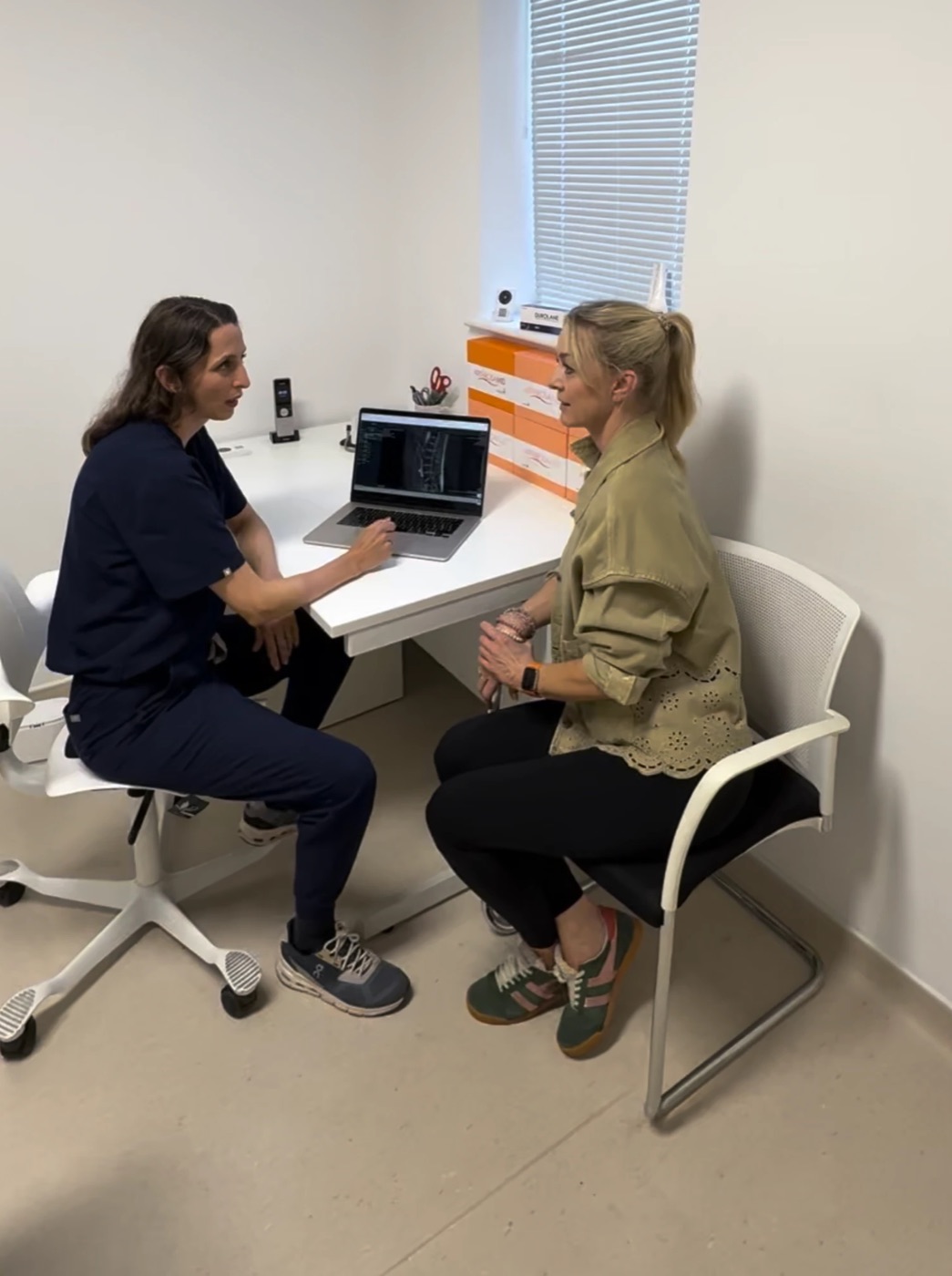
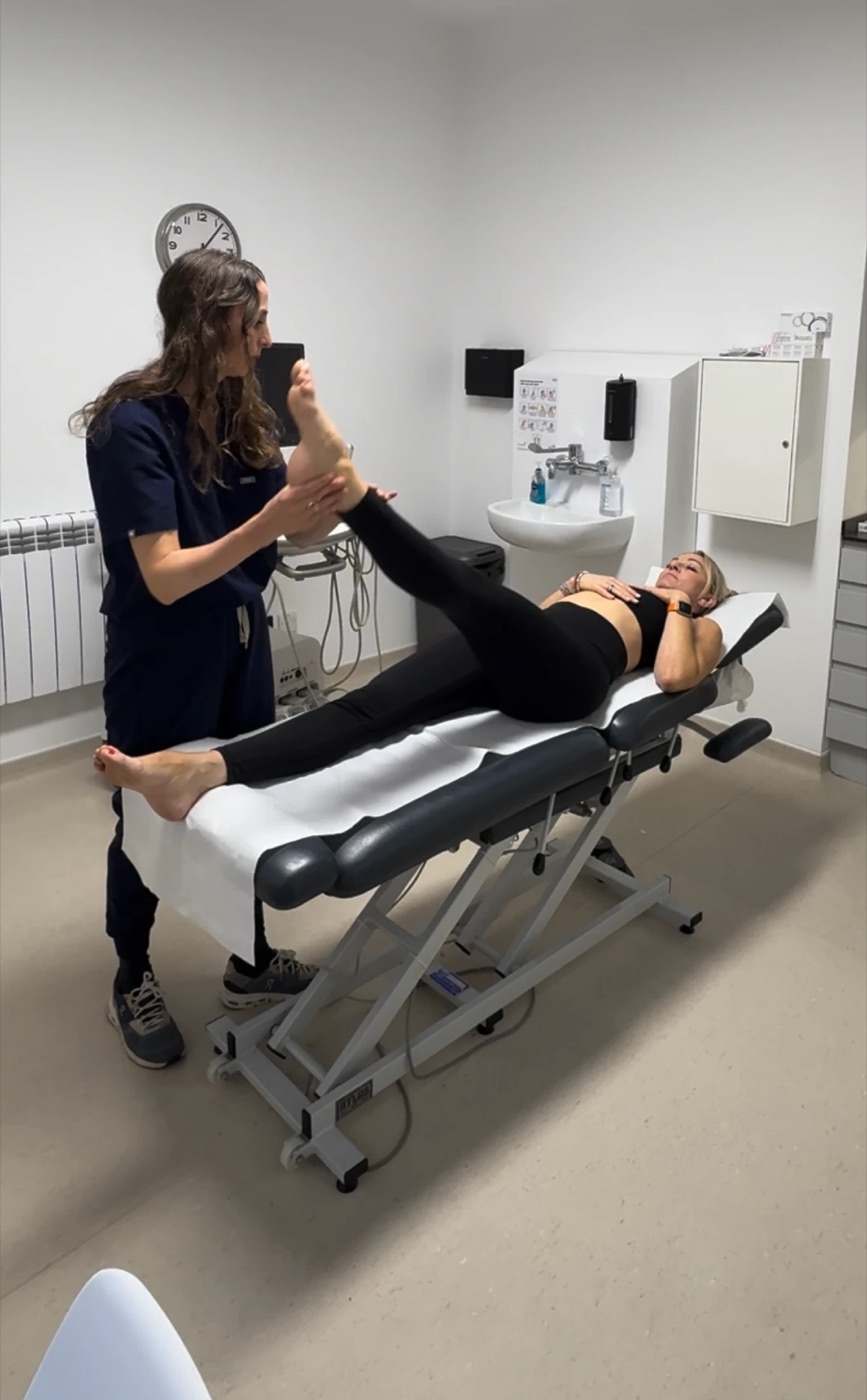
1. Assessment. Your clinician will ask how and when your symptoms started, what makes them better or worse, and what treatment you’ve already tried. They’ll check movement, strength, sensation and reflexes, and ask specifically about leg or arm symptoms and any change in bladder or bowel function.
2. A plan you understand. If decompression is a reasonable option, we’ll explain what it can and can’t be expected to do, the evidence, the costs and the alternatives. Scans aren’t needed for most back pain, but if one would change your treatment, we’ll explain why and arrange it.
3. Treatment sessions. The table is set up for your condition and comfort. Tell us straight away if anything feels worse; we’ll adjust or stop the session.
4. Review and rehabilitation. We track things that matter to you, such as sitting time, walking distance, sleep and pain, and review the plan if you’re not improving. Decompression usually sits alongside exercise, chiropractic or physiotherapy care rather than replacing it.
There’s no fixed number of sessions that guarantees a result.
This is a fair question, and the honest answer is that the evidence is mixed.
Older traction research. A Cochrane review of 32 randomised trials with 2,762 participants looked at traditional traction methods across many different devices. It found they probably make little or no difference to pain or function for most people with low back pain, with or without sciatica [1].
Newer, device-based research. Some modern decompression tables work differently from the older traction methods in those trials. A 2022 randomised trial at Seoul National University Bundang Hospital compared 10 sessions of non-surgical decompression (on a Spine MTK-1 table, an earlier model from Shinhwa Medical, the Korean company that makes the MT Core) with a sham version of the same treatment in 60 adults with subacute lumbar disc herniation [2]. The decompression group had:
No treatment-related adverse events were reported.
It’s an encouraging result, but it has limits:
So it doesn’t prove that MT Core treatment works for everyone with back pain.
Neck-related arm pain. A 2018 meta-analysis of five trials found some support for adding traction to physiotherapy for cervical radiculopathy (arm pain from a trapped nerve in the neck). It showed short- to medium-term pain reduction and smaller effects on function [3].
What this means for you: decompression may help some people, particularly as part of a wider plan, but it isn’t a proven cure. A shrinking disc on a scan doesn’t always mean less pain. We’ll be cautious with anyone who promises that decompression will reverse disc degeneration, permanently “reposition” a disc, or definitely prevent surgery, and we won’t make those claims ourselves.
| Treatment | What to know |
|---|---|
| Exercise and rehabilitation | The foundation of most plans for back pain. |
| Education and self-management | Staying active and understanding your pain both help recovery. |
| Manual therapy (chiropractic, physiotherapy) | Often used alongside exercise, and can be combined with decompression. |
| Medication | Depends on your diagnosis and health; discuss it with your GP or pharmacist. |
| Non-surgical spinal decompression | Controlled, computer-guided traction. Non-invasive and generally well tolerated; the evidence is mixed and still developing. |
| Surgery | Considered for specific problems, such as persistent sciatica when symptoms and scans support it. |
The right option depends on your diagnosis, how severe your symptoms are, and what matters to you.
Call 999 or go to A&E straight away if you have back pain with any of these:
These can be signs of cauda equina syndrome, a spinal emergency.
For neck problems, seek urgent medical advice if you develop new clumsiness of the hands, problems with balance or walking, or worsening weakness in your arms or legs.
Injection Therapist and Chiropractor, Clinic Director
GCC 03996

Chiropractor
GCC 00771

Chiropractor
GCC 04042



I went to see Gary as I was having some lower back issues. He was very friendly and knowledgeable, explaining what the likely causes were… and he followed it up with some helpful exercises to prevent future issues, as well as practical advice.
I recommend Jean Luc to everyone I meet. He adopts a holistic, whole person approach… and offers great advice for continuing the work at home. The clinic is beautiful and centrally located.
Professional, friendly and most importantly effective. What’s also nice is that I was never forced to rebook or given a ‘minimum number of sessions’ for results. It’s straightforward. Book again if it helps and you need additional support.
After the first appointment with Gary I noticed a marked improvement, and it has continued to improve with subsequent treatments. Gary’s advice on precipitating factors has been really useful and the remedial exercises he suggested are also very effective.
I went for a consultation with Jean Luc who suggested my migraines could be caused by a problem with my neck. After several treatments to my neck, back and jaw, my headaches began to improve and become less frequent… Jean Luc is very knowledgeable and kind.
Both my wife and I have been seeing Gary Edwards… initially for acute flares of back/neck problems and now for maintenance treatment. He is extremely professional and thorough… giving us a full half hour on each visit.
Real Google reviews, shortened. Individual results vary. Read all our reviews ↗
Most people feel a gentle stretch and find it comfortable. Some notice more pain or more leg or arm symptoms. Tell us if that happens, so we can adjust or stop the treatment.
It’s non-invasive, computer-controlled, and the session can be stopped at any time, and most people tolerate it very well. In a 2022 trial, no treatment-related side effects were reported. Some people notice temporary soreness, muscle spasm, or a short-lived flare of pain or nerve symptoms. It isn’t suitable for everyone: for example, recent spinal surgery or fractures, metalwork in the spine, severe osteoporosis or pregnancy usually rule it out or need specialist advice. We check this at your assessment.
There’s no set number that guarantees a result. Many people choose a course of 10 sessions (£650), but we’ll suggest a plan based on your assessment and review your progress regularly, rather than carrying on automatically.
It may help some people. A 2022 trial found less leg pain and better function in people with recent disc herniations, but older reviews of traditional traction for sciatica didn’t show a consistent benefit, so results vary. We’ll discuss all your options, including exercise-based care and, where appropriate, a specialist opinion.
Sometimes, but not always. Many people improve without an operation; some need a surgeon’s opinion. Decompression should never delay urgent assessment if nerve symptoms are severe or getting worse.
Start with an assessment: £70 first consultation, or a free consultation call.
Written by Gary Edwards, Chiropractor (GCC 03996). Last updated 15 October 2026.