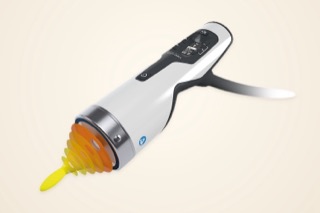
Shockwave therapy is low-risk for most people, but it isn’t suitable for everyone. It should not be used over a pregnancy, over an area with infection or a tumour, over the lungs, or in someone with a serious bleeding problem. Other situations need extra care, and some problems simply won’t respond to it.
This article explains who shouldn’t have shockwave therapy, when it needs caution, and the side effects to expect. It’s general information, so your own suitability is always checked at an assessment.
What is shockwave therapy?
Extracorporeal shockwave therapy (ESWT) sends short pulses of acoustic energy through the skin into a painful tendon or the tissue around it. It is mainly used for long-standing tendon problems, such as tennis elbow, heel pain and Achilles pain.
There are two main types. Radial shockwave spreads out from the applicator and works near the surface. Focused shockwave concentrates energy at a set depth. A 2015 systematic review found no clear evidence that one type gives better results than the other [1].
The evidence for shockwave varies by condition. For some tendon problems the trials are encouraging; for others they are mixed or limited. It’s usually offered when pain hasn’t settled after a good trial of exercise-based rehabilitation, not as a first step.
Who should not have shockwave therapy?
These are situations where shockwave should not be used over the area concerned. Clinicians call them contraindications.
- Pregnancy. Shockwave must never be aimed at an unborn baby [2]. Most clinics don’t treat any area during pregnancy.
- Infection in the treatment area. This includes skin infection and deeper infection, such as in a joint or bone [2].
- Serious bleeding or clotting problems. Higher-energy shockwave can cause bleeding into the tissues, so a severe clotting disorder rules it out [2].
- Over the lungs. Aiming shockwave at the lungs can cause bleeding or a collapsed lung, so the chest wall and upper back are treated with great care or not at all [2].
- A known tumour in the area. Shockwave is not used over cancer or an unexplained lump.
- Growth plates in children and teenagers. The growing ends of bones are avoided.
- The brain, eyes, spinal cord, and major nerves or blood vessels. These are kept out of the treatment area.
- A pacemaker or other implanted electronic device near the area. Shockwave can interfere with the device.
When is extra care needed?
Some situations don’t rule shockwave out, but they change how or when it’s used. Your clinician will ask about each of these.
Blood-thinning medicines. Anticoagulants such as warfarin or apixaban make bruising more likely. Lower settings may be used, or another treatment may be safer. Never stop a blood thinner without advice from the person who prescribed it.
A recent steroid injection. Steroid can weaken tendon tissue for a while. Most clinicians leave a gap of several weeks between a steroid injection and shockwave to the same tendon. One review suggests that repeated steroid injections beforehand, rather than shockwave itself, may explain some rare complications reported after treatment [2].
Metal implants and joint replacements. Metal reflects shockwave energy strongly. Treatment near a joint replacement, plate or screws needs careful positioning, or may be avoided.
Reduced feeling in the skin. If you have nerve damage, for example from diabetes, you may not feel when the treatment is too strong. Settings are kept lower and the skin is checked more often.
A torn tendon. A complete or large tear needs a specialist opinion first. An ultrasound scan helps tell a sore tendon from a torn one.
When is shockwave unlikely to help?
Being safe to have shockwave isn’t the same as it being the right treatment. It may not be a good choice when:
- the diagnosis is uncertain. Pain from a trapped nerve, arthritis or the spine won’t respond to treatment aimed at a tendon.
- the injury is recent. Many tendon problems settle within a few months with exercise and sensible changes to activity, so shockwave is usually kept for pain that hasn’t.
- rehabilitation hasn’t been tried. Shockwave is used alongside a strengthening programme, not instead of one.
- the evidence for that condition is weak. For calcific tendonitis of the shoulder, for example, the research is limited and it isn’t an established treatment. If it is considered at all, it’s discussed only after an ultrasound scan and alongside other options.
What side effects can shockwave cause?
Serious complications are uncommon when shockwave is used as recommended [2]. The usual effects are:
- discomfort during treatment, which is adjusted as you go;
- redness of the skin, and sometimes small bruises;
- a short-lived increase in aching for a day or two;
- occasionally, feeling faint during treatment.
Contact the clinic or your GP if you notice spreading redness, heat or swelling, a fever, new numbness, or large bruises, especially if you take a blood thinner.
How suitability is checked at Vale Health Clinic
Shockwave at Vale starts with a free consultation. The clinician asks about your health, medicines, past injections and operations, and examines the painful area. Where it would change the plan, an ultrasound scan is used to look at the tendon.
If shockwave isn’t suitable, or isn’t likely to help, we’ll say so and talk through other options, such as rehabilitation or an ultrasound-guided injection. Sessions cost £90. The first lasts about 50 minutes and follow-ups about 30 minutes. Results vary, and shockwave doesn’t work for everyone.
To arrange a free consultation, call 01892 543029 or visit the shockwave therapy page.
References
- Schmitz C, Császár NB, Milz S, et al. Efficacy and safety of extracorporeal shock wave therapy for orthopedic conditions: a systematic review on studies listed in the PEDro database. Br Med Bull 2015;116:115–138. doi:10.1093/bmb/ldv047
- Auersperg V, Trieb K. Extracorporeal shock wave therapy: an update. EFORT Open Rev 2020;5(10):584–592. doi:10.1302/2058-5241.5.190067
This article is general information, not personal medical advice. Please speak to a clinician about your own situation.
This article is general information and isn’t a substitute for advice about your own health. If you’re worried about a symptom, speak to your GP or book an assessment.