01
Step 1 of 4
Free consultation
We talk through your symptoms, work, sport and what you’ve tried so far. This can be in person or by phone.
We’d like to use cookies to understand how our website is used and to measure our Google advertising. They’re only set if you agree. Essential settings, such as remembering this choice, are always used. Find out more.
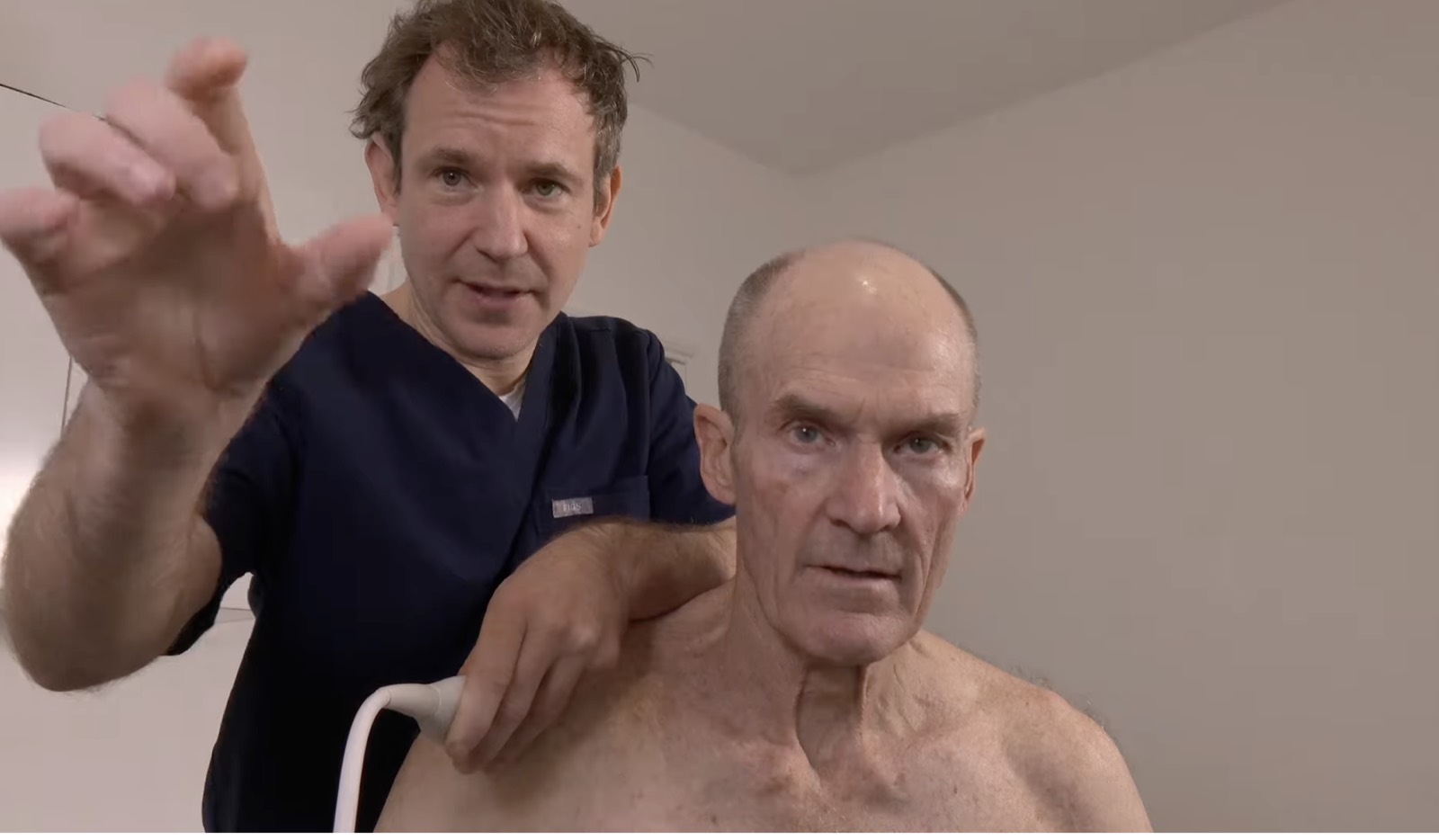
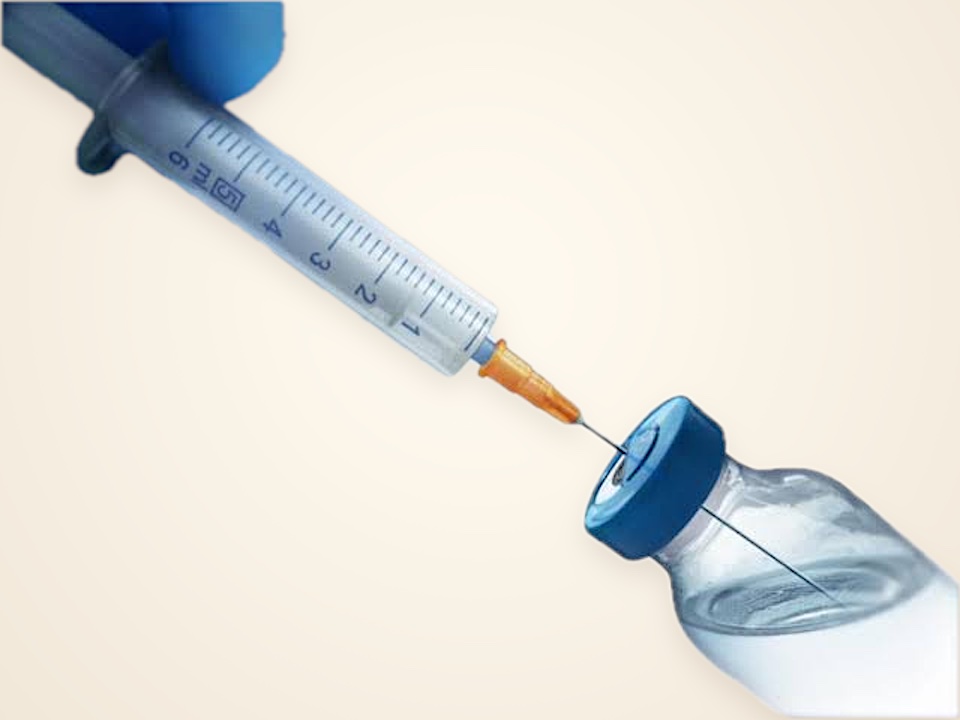
Shoulder pain from an irritated rotator cuff tendon can drag on for months. We scan the shoulder to find the cause, then combine focused shockwave with exercise, and an injection if the bursa is inflamed.
Free consultation, in person or by phone · £90 a session
Pain at the top or outer side of the shoulder is one of the most common reasons people come to see us. It often hurts to reach up to a shelf, put on a coat or lie on that side at night.
In most adults, the cause is the rotator cuff, the group of four tendons that hold the shoulder steady. The tendon most often affected is the supraspinatus, which runs over the top of the joint.
Over the tendon sits the subacromial bursa, a thin fluid-filled sac that helps it glide. When the tendon is irritated, the bursa often becomes inflamed too.
Book a free consultation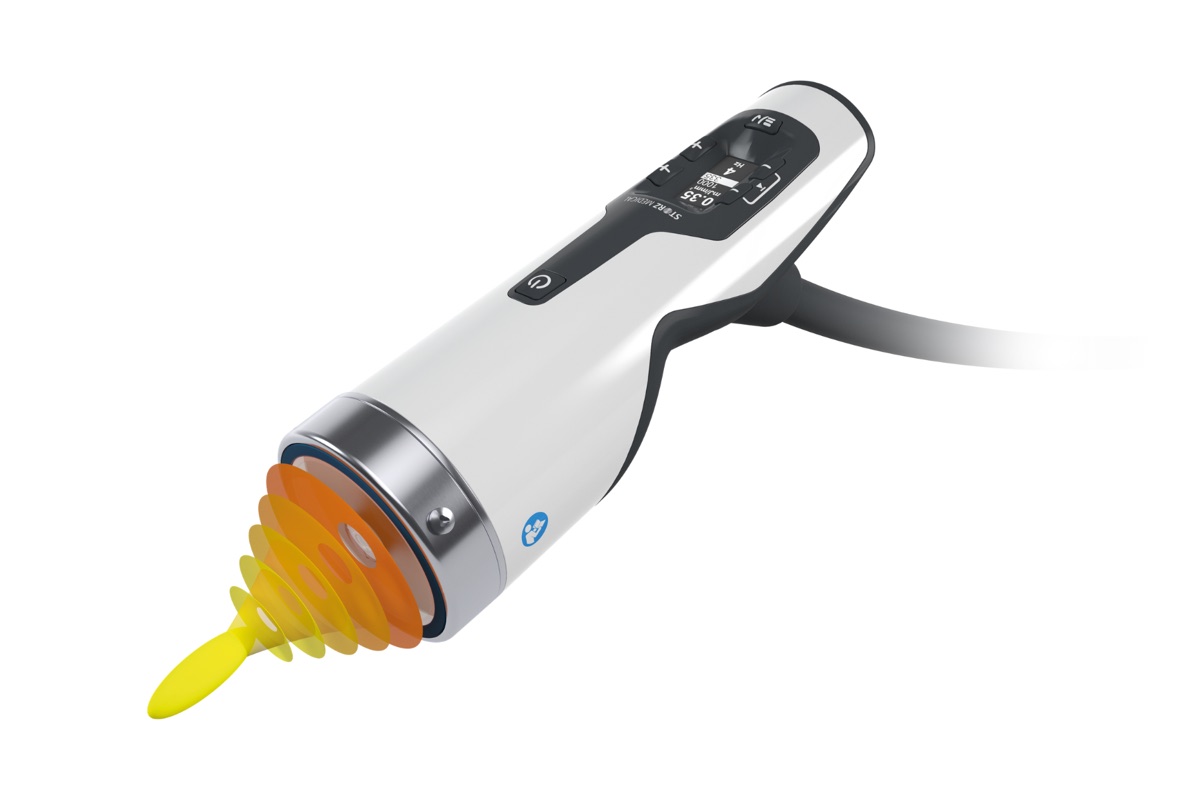
Supraspinatus tendinopathy means the tendon has become painful and less able to cope with load. It usually builds up gradually, from repeated overhead work, a jump in sport or gym training, or simply age-related change. Some people also have small tears.
Subacromial bursitis is inflammation of the bursa over the tendon. It tends to cause a sharper ache, often worse at night.
The two often occur together, and the pain pattern is similar. An ultrasound scan helps us see which is causing most of your symptoms, and that shapes the treatment.
Shockwave isn’t right for every shoulder, and the evidence is mixed for tendon pain without calcium. These are the reasons it may be worth trying.
Pulses are delivered through the skin, with no injection or anaesthetic.
An option if steroid injections have only helped for a short time.
Easing pain can make the strengthening exercises easier to keep up.
Most people carry on with work and daily activities straight afterwards.
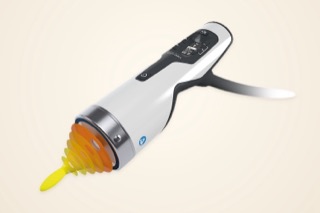
Shockwave therapy delivers short, high-energy sound pulses through the skin into the tendon. We use focused shockwave for the shoulder, because it reaches the deeper tendon under the bony arch of the shoulder blade.
Exactly how it helps isn’t fully understood. Research suggests the pulses may reduce pain signalling and prompt the tendon to start repairing.
The pulses are thought to calm the nerve endings that carry tendon pain.
Studies suggest shockwave may stimulate blood flow and tendon repair.
Strengthening exercises then help the tendon adapt and cope with everyday use.
Shockwave is usually considered when shoulder pain has lasted more than three months and hasn’t settled with rest, painkillers and a good exercise programme.
It tends to suit people with supraspinatus tendinopathy confirmed on a scan, especially if they would rather avoid repeated steroid injections.
For subacromial bursitis on its own, shockwave isn’t usually the first choice. An inflamed bursa often settles faster with an ultrasound-guided steroid injection and exercise. Shockwave may then help with the tendon underneath.
Several shoulder problems feel alike, and they need different treatment. At your assessment we look for signs of:
An ultrasound scan of the tendons and bursa, alongside a careful examination, usually tells these apart.
The evidence for shockwave in the shoulder depends on whether there’s calcium in the tendon.
So for supraspinatus tendinopathy without calcium, shockwave is something to try alongside exercise, not a guaranteed fix. Some people improve clearly, and others don’t. We’ll tell you honestly whether it’s worth trying for your shoulder.
Get urgent medical advice if shoulder pain comes with chest pain or breathlessness, a fever, a hot red swollen joint, or sudden weakness after a fall. Call 999 if you think you might be having a heart attack.

Injection Therapist and Chiropractor, Clinic Director
GCC 03996



Severe plantar fasciitis. Had several sessions with Gary, shockwave therapy. Really has settled down well. Gary provides calm reassurance coupled with great knowledge and expertise in the field.
Gary is very knowledgeable and has given me lots of great advice and the treatment has been great! My pain levels are much better… Booking was easy using the online system and Gary has been very helpful and friendly.
I’ve just had my 6th treatment for plantar fasciitis and I am very happy with the reduction in pain so far. Gary has been so informative and invested in my healing process.
Gary was a great help, in particular his recommendations on using the balance pad to strengthen surrounding tendons… It took a long time to notice any major improvement… Give it a go, but please don’t expect it to work quickly and solve everything.
After an initial consultation with Gary for achilles tendonitis, an ultrasound scan followed by shockwave treatment, I then had weekly sessions over a period of 2 months… The shockwave results weren’t instantaneous and the pain sometimes fluctuated.
Attended Gary at the Vale Health Clinic for chronic shoulder calcific tendinopathy… Gary was informative, without being condescending, and explaining everything he was doing and why, as well as being personable and chatty!
I have had 5 sessions with Gary, and so far things are going really well. I am not totally pain free but am now able to do most things without a problem. He gave me gentle exercises to do… Gary is very knowledgeable and takes time to listen to you.
Real Google reviews, shortened. Individual results vary. Read all our reviews ↗
It can be uncomfortable, a deep tapping or pulsing feeling over the tendon. We start gently and adjust the intensity so it stays bearable.
The shoulder may ache for a day or two, and the skin can look red or slightly bruised. We don’t use shockwave in some situations, such as pregnancy or with certain blood-thinning medicines, and we check this at your consultation.
Usually 3 to 8 sessions, about a week apart. We review your progress as we go, and won’t continue if it isn’t helping.
Improvement is usually gradual over several weeks, and may continue after the course ends. It isn’t usually immediate.
It isn’t a treatment for a large or full-thickness tear. If the scan suggests a significant tear, we’ll talk to you about referral for a surgical opinion.
If the bursa is very inflamed and pain is stopping you sleeping or exercising, an ultrasound-guided steroid injection may settle it faster. Some people have an injection first, then shockwave and exercise for the tendon.
Find out if shockwave suits your shoulder at a free consultation.
Written by Gary Edwards, Injection Therapist (PG Cert Injection Therapy) and Chiropractor (GCC 03996). Last updated 15 October 2026.